

A single wording error in an Estonian tax law cost the state €24 million a year. The statute cut the rate on “skill games” and left online gambling untaxed for a year. Within hours of the mistake being spotted, a former official built an AI tool that reads every draft bill on Parliament’s website and flags broken references, contradictory wording, arithmetic errors and impossible dates.
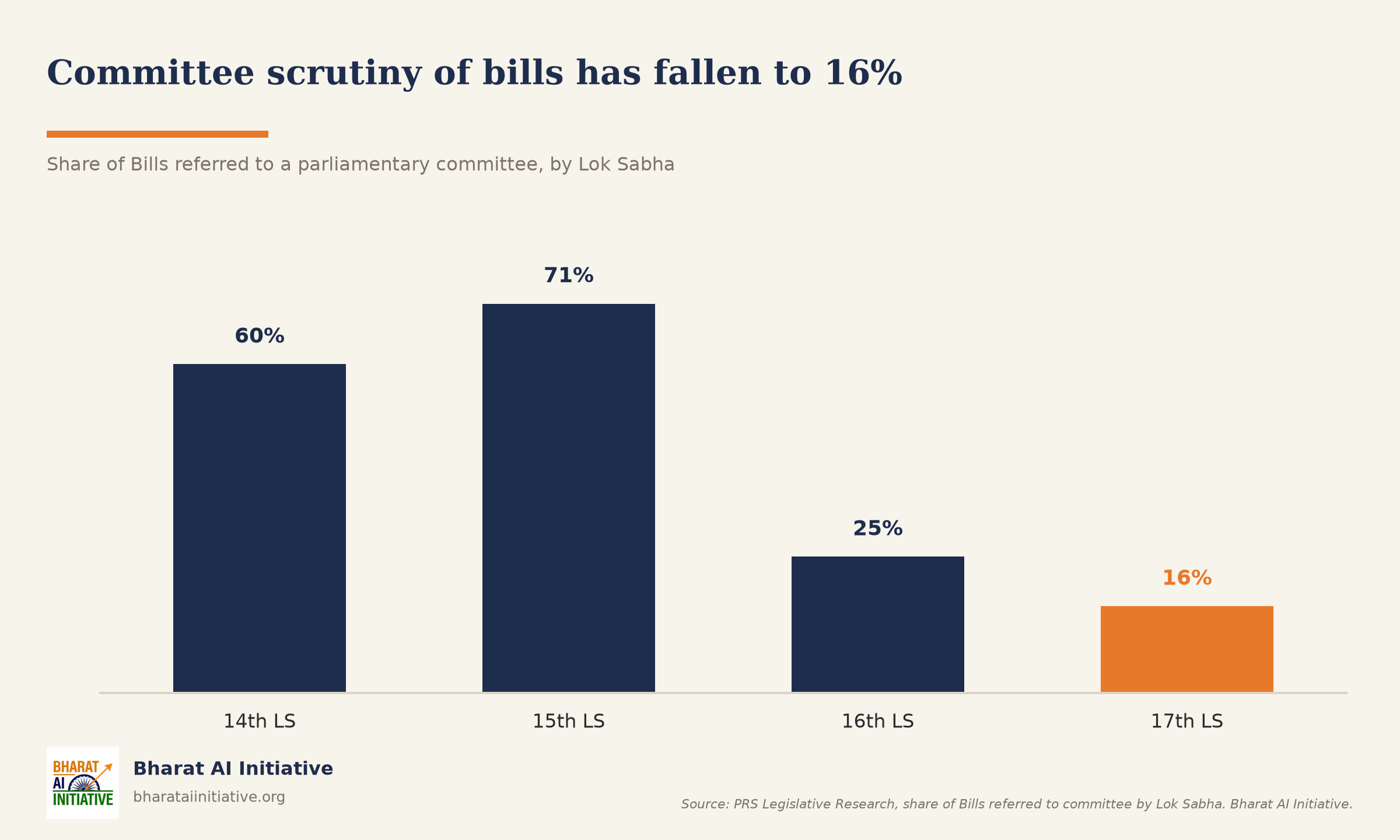
Drafting slips of this kind occur in every legislature, and India catches and corrects them just like any other. When the Narcotic Drugs and Psychotropic Substances Act was amended in 2014, a renumbered clause left the penalty section pointing to the wrong provision; Parliament corrected it in 2021, backdated to 2014. Smaller fixes are routine, through corrigenda and a standing Repealing and Amending Bill; the tax department issued one such corrigendum to the new Income-tax Rules in April 2026. Repair often come after a bill becomes law, because a crowded calendar leaves little time to catch slips before it passes. The 17th Lok Sabha referred 16 percent of bills to a committee and gave 35 percent of them less than an hour of debate, indicating potential value from assistive tools to aid, and free up the time of lawmakers.
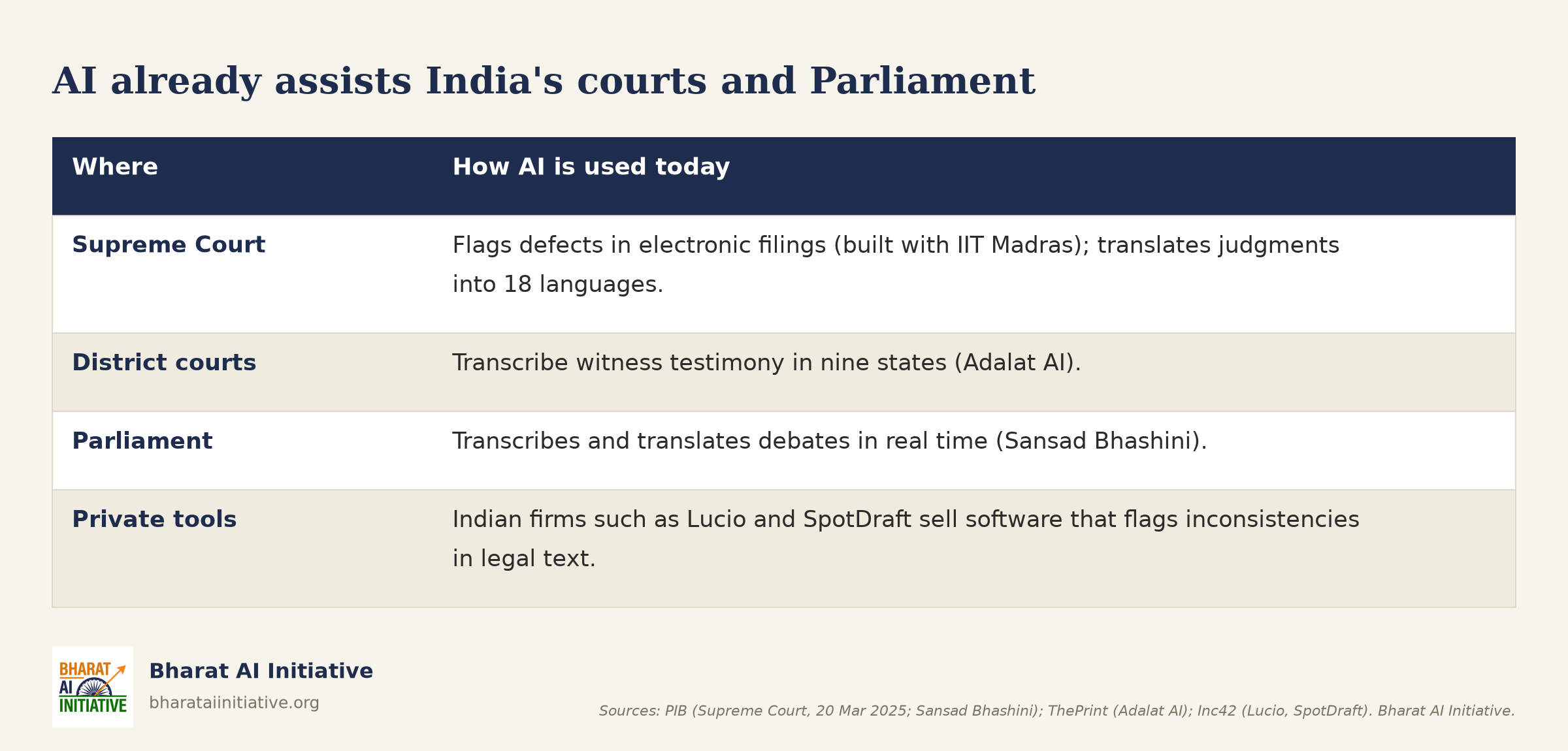
India has already moved quickly to bring AI into its legal institutions. The Supreme Court uses AI to flag defects in electronic filings, a tool built with IIT Madras, and to translate judgments into 18 languages. Parliament’s Sansad Bhashini transcribes and translates debates in real time. District courts in nine states record testimony through Adalat AI. A checker that reads the text of a draft bill would extend this work to the drafting desk.
At the same time, care must be taken to ensure assistive use and suitable guardrails. On 2 July 2026 the Supreme Court set aside a tribunal order that relied on AI-invented precedents, holding that citing fabricated judgments is professional misconduct and any decision resting on them is void. The Kerala High Court permits AI in the district judiciary for assistance alone, with every output verified by a judge.
An assistive checker could read a draft bill for broken references, wrong citations and impossible dates, and return them to the drafter before the bill is introduced. It would strengthen the scrutiny a committee brings and leave every question of policy to elected members. The engineering is within reach and locally available: Indian firms such as SpotDraft, Lucio, and Jhana.ai already build software that checks contracts for such flaws. The result would be a cleaner statute book, with lawmakers still answerable for every word, supported by AI to make the mundane aspects of their responsibility easier.
At Bharat AI Initiative, we help public institutions adopt AI where it strengthens the work and stops short of the decision. Talk to us: contact@bharataiinitiative.org.
Sources: WIRED (Estonia, 9 July 2026); PRS Legislative Research (NDPS (Amendment) Bill 2021; Repealing and Amending Bill 2025; committee-referral and debate-time statistics, 17th Lok Sabha); JurisHour (CBDT corrigendum to the Income-tax Rules, 2026, 16 April 2026); Press Information Bureau (Supreme Court use of AI, 20 March 2025; Sansad Bhashini); ThePrint (Adalat AI in district courts); Inc42 (SpotDraft); LiveLaw and Bar & Bench (Supreme Court, Pooja Ramesh Singh v. Jammu and Kashmir Bank, 2 July 2026; Kerala High Court AI policy, 19 July 2025).