

A start-up runs on working capital. It raises from savings, angels or venture funds, shows progress, and raises again until the business pays for itself. Public buyers, constrained by procurement guidelines, are among the slower payers to India’s micro, small and medium enterprises (MSMEs); the law allows buyers 45 days to pay, and real cycles run 60 days and longer. Bank guarantees, which government contracts demand, tie up still more capital.
A platform conceptualized in 2014, and first launched in 2017 already provides a solution to reduce the gap between invoice recognition, and payment. TReDS, the Trade Receivables Discounting System, is an electronic platform regulated by the Reserve Bank of India.
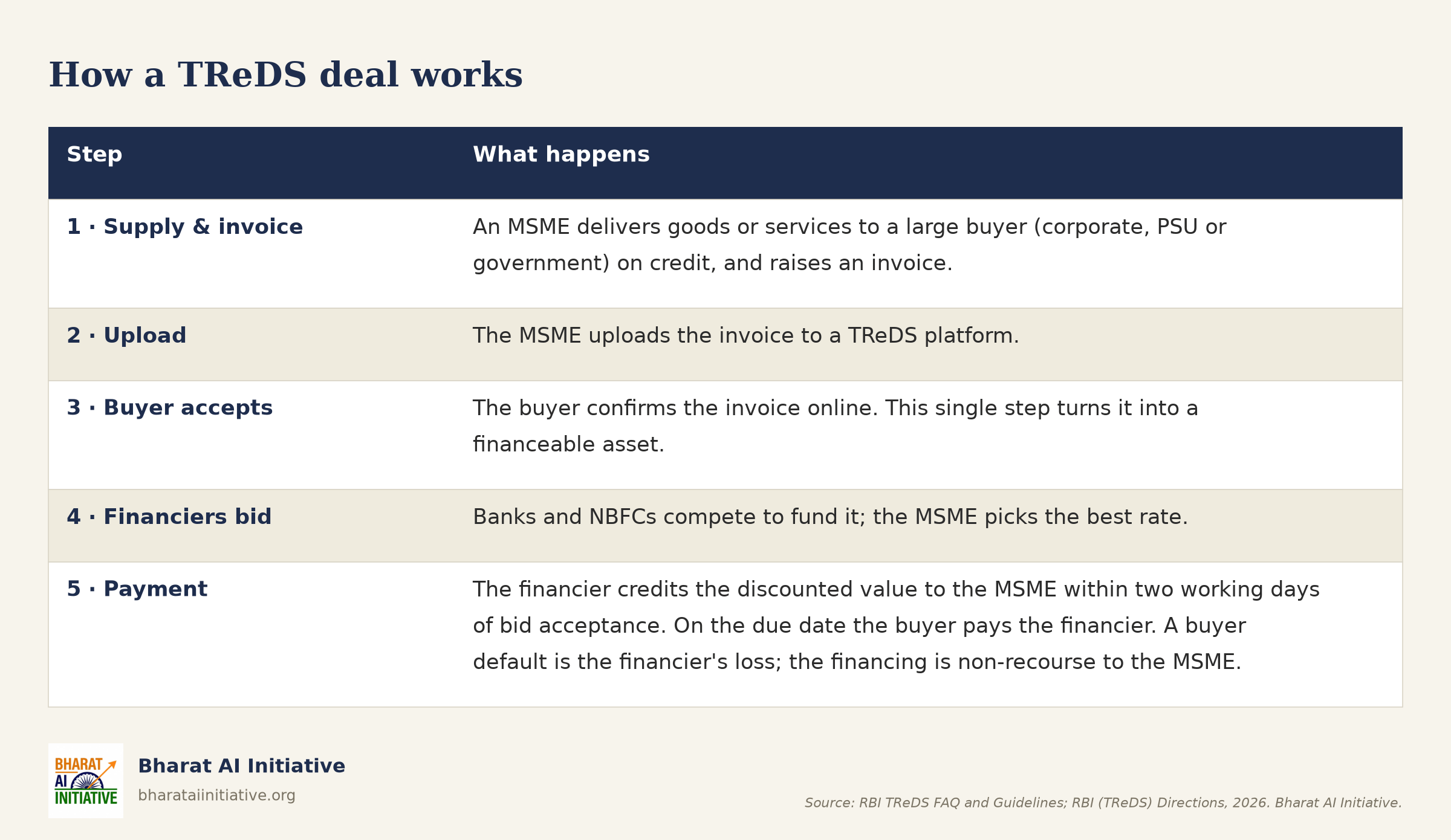
The financier’s risk is the buyer’s default, so the discount is priced on the buyer’s credit. A two-year-old start-up selling to a solvent city borrows, in effect, at the city’s rating.
Already at scale
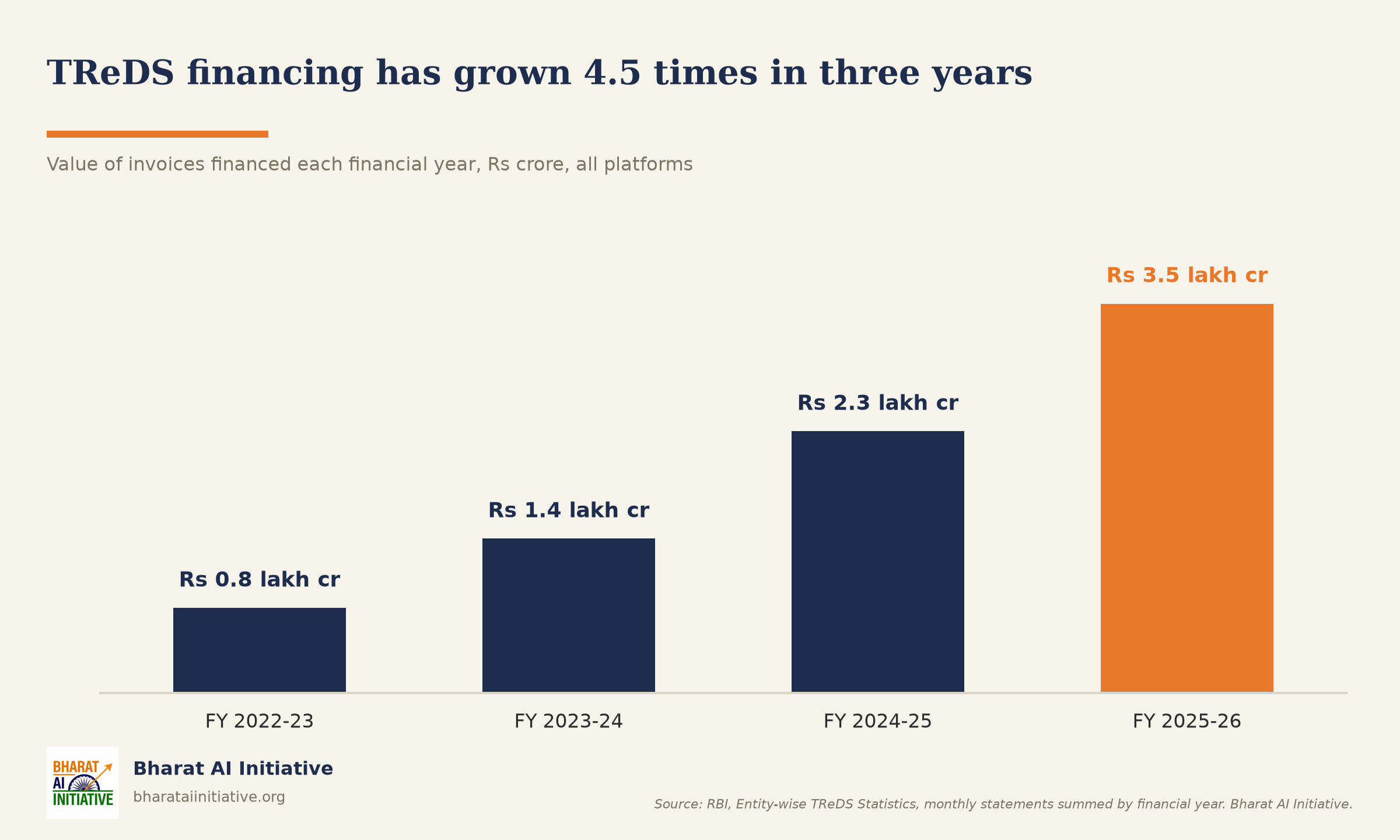
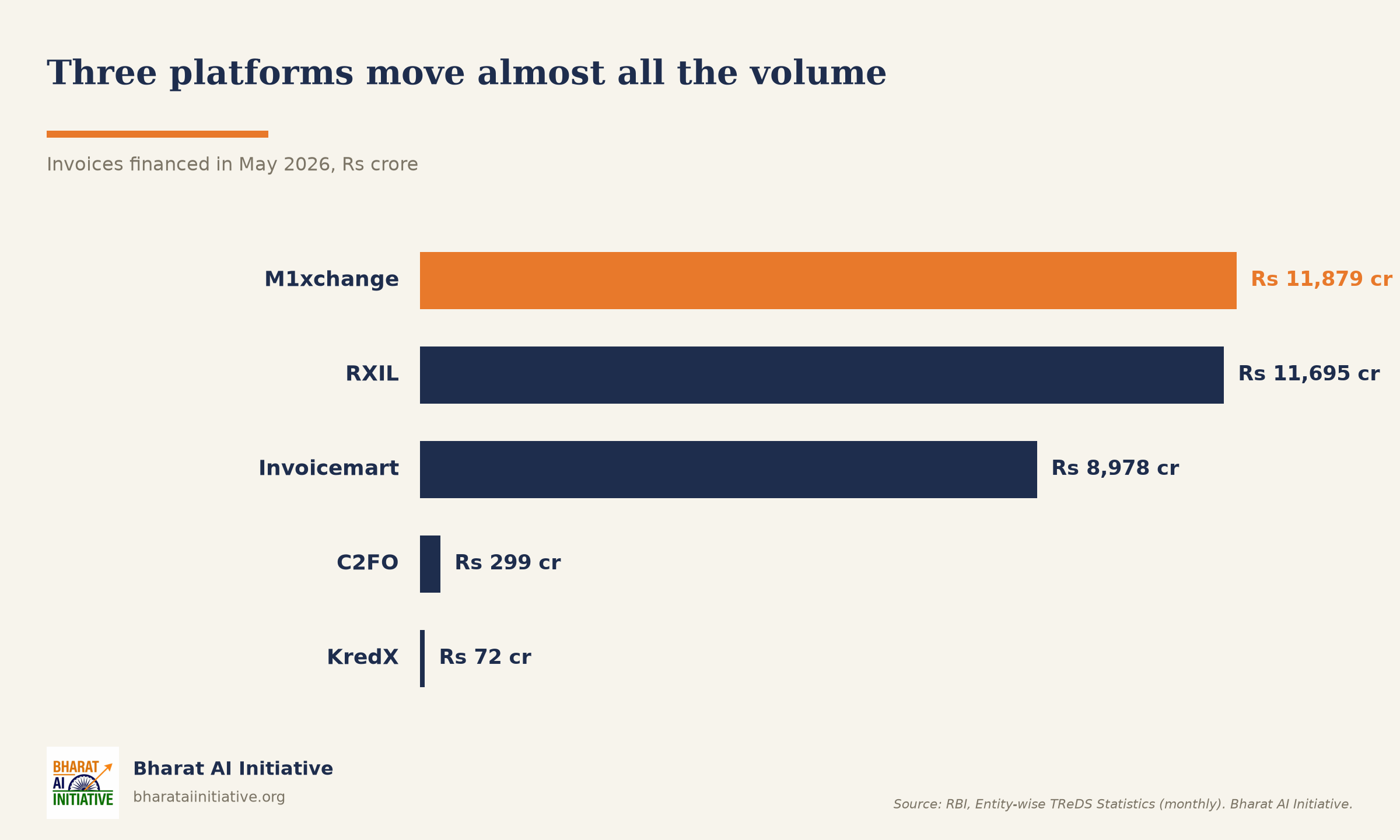
Financiers put Rs 3.5 lakh crore through TReDS in FY 2025-26, financing 16 lakh invoices across five licensed platforms: 4.5 times the volume of three years before.
The missing buyer
TReDS is open to private corporates, PSUs, and government entities. Government’s share of the TReDS flow is not published by RBI, which publishes volumes by platform, not by buyer type. What the record shows instead is government being ordered to participate.
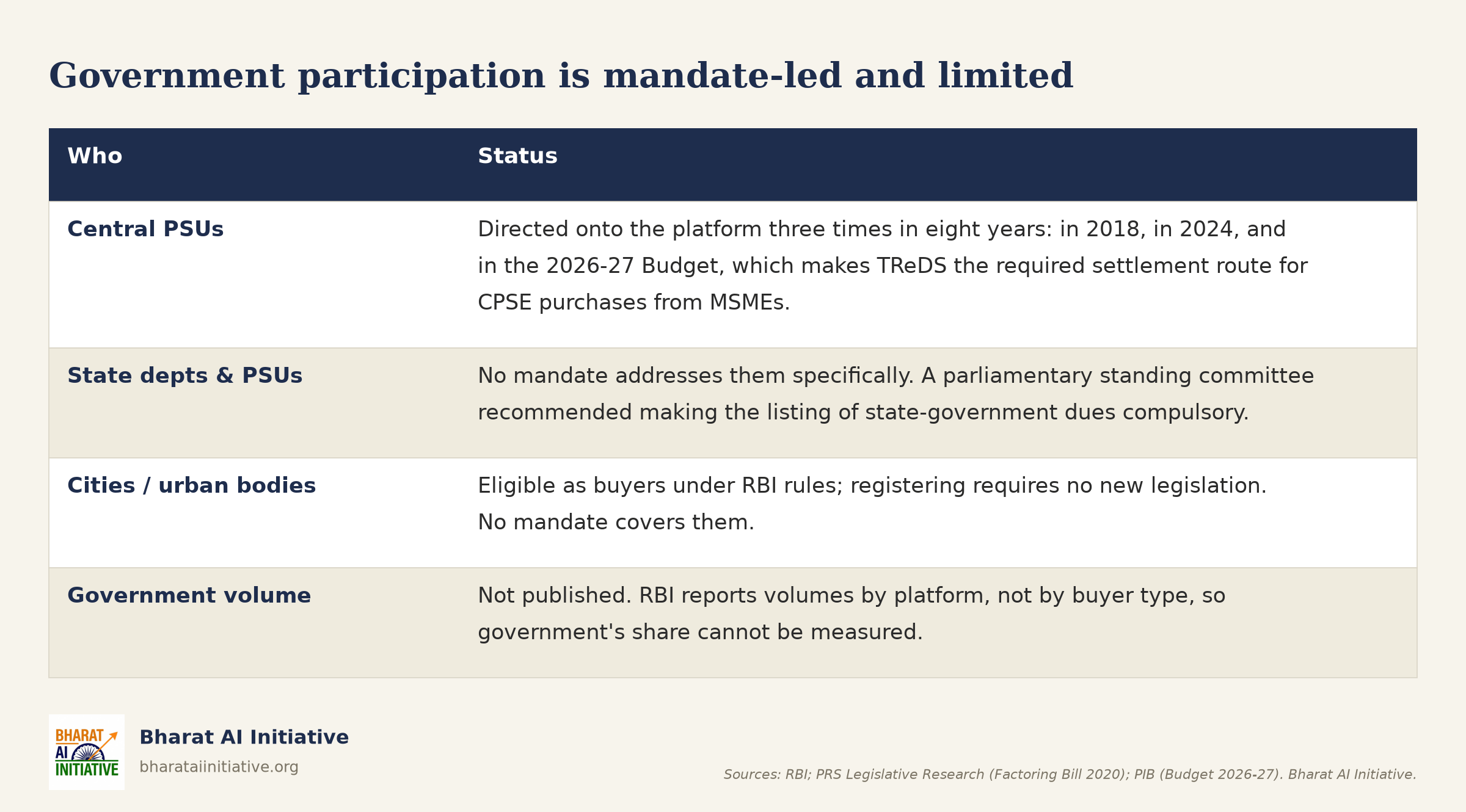
The centre has directed its own enterprises onto the platform three times in eight years: in 2018, in 2024, and again in the 2026-27 Budget, which makes TReDS the compulsory settlement route for central-PSU purchases from MSMEs. An order that has been issued three times suggests friction or bottlenecks in actual implementation. No mandate is addressed to the states; a parliamentary standing committee’s recommendation to put state-government dues on the platform remains a recommendation.
Impact on collaboration with startups
The companies cities want to buy from are young, tech-focused, asset-light and pre-profit: the least able to carry a 60-day receivable and a bank guarantee at once. For a young AI or tech startup, the working capital cost of selling to government is the recurring barrier. A city that wants innovative AI suppliers, has to be a customer they can afford to serve.
None of this is automatic. Financiers favour highly rated buyers, so invoices drawn on weaker ones can go unfunded; the 2026-27 Budget adds a credit guarantee for invoice discounting. The platform reaches small and medium firms more readily than the smallest micro-enterprises. And it works only if the buyer confirms invoices promptly, every time.
The system is built, regulated and moving Rs 3.5 lakh crore a year. What remains is the ability and willingness of state and city governments to use it.
At Bharat AI Initiative, we help cities and public institutions become customers that young start-ups can afford to serve, from first pilot to lasting supplier. Talk to us about your city’s first pilot: contact@bharataiinitiative.org.
Bharat AI Initiative. Figures are RBI’s official Entity-wise TReDS Statistics: value of factoring units financed each month, 48 monthly statements (April 2022 to March 2026) summed by financial year, verified July 2026. Other sources: RBI TReDS FAQ, Notification of 7 June 2023 and (Trade Receivables Discounting System) Directions, 2026; PRS Legislative Research (Standing Committee on the Factoring Regulation (Amendment) Bill, 2020); Press Information Bureau (Union Budget 2026-27); Swarajya on MSME payment cycles (January 2026).